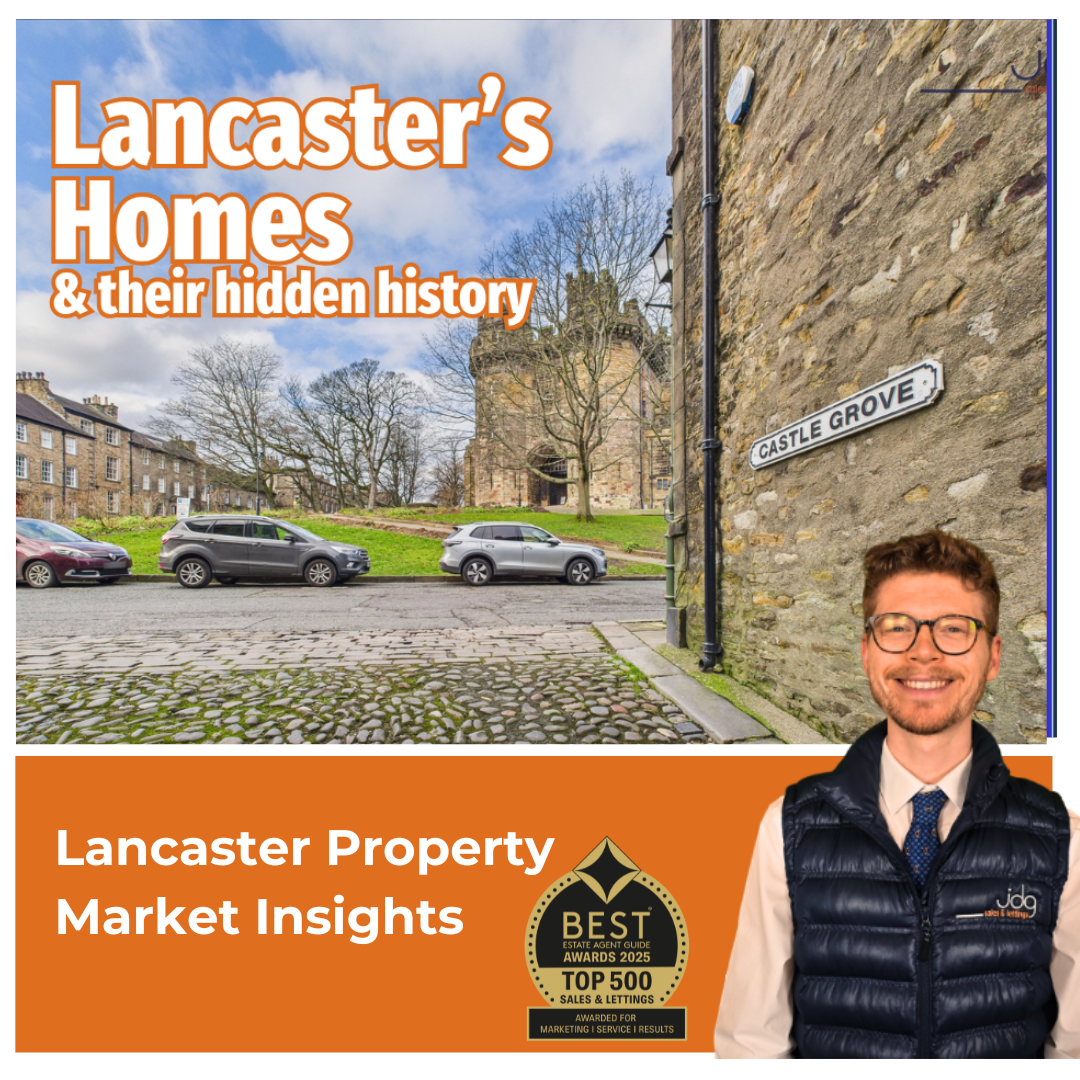
When we talk about the Lancaster property market, it’s easy to focus on house prices. But price is only part of the story. Long before that comes a home’s character—and long before character comes its age. Every city has its own housing fingerprint, shaped over time by how people have lived, worked and built. Lancaster is no different. It’s a city built in layers, and those layers still influence the market today.
A City Rich in Character and History
One of the first things that stands out about Lancaster is just how many older homes we have. Around 27% of properties were built before 1919, which is higher than the national average. These are the homes that give Lancaster so much of its personality—Georgian townhouses, Victorian terraces, and properties built during a time when the city was expanding through industry and trade.
They often offer generous proportions, high ceilings and original features that buyers still love today. Of course, with that character comes responsibility, and these homes can require more upkeep. But for many, that’s part of the appeal—owning a piece of Lancaster’s history.
Growth, Space and Changing Lifestyles
As we move into the interwar and post-war years, we start to see a shift in how homes were designed. Around 20% of Lancaster homes were built between 1919 and 1939, with a further 18% built after the war. These periods introduced more suburban-style living, with semi-detached homes, larger gardens and a focus on space.
These homes still make up a large part of Lancaster’s most established neighbourhoods. They tend to offer a balance that many buyers are looking for—good room sizes, outdoor space and locations that feel settled and well connected. Over time, many have been extended and updated, meaning they now suit modern living very well.
Modern Living and a Changing Market
Interestingly, Lancaster has a slightly smaller proportion of newer homes compared to the national picture. Only around 9% of properties have been built since 2003. While we do have modern developments, they don’t dominate the landscape in the same way they do in some towns and cities.
Newer homes bring energy efficiency, contemporary layouts and lower maintenance, which are all important to today’s buyers. However, they often come with smaller gardens, so it’s always a balance depending on what matters most to each individual.
What Lancaster offers, more than anything, is choice. From period homes full of character to practical mid-century properties and modern builds, there’s a real mix—and that’s one of the market’s strengths.
In Summary
Understanding the age of Lancaster’s homes helps explain so much more than just when they were built. It gives context to how homes feel, how they function and how they’re valued. Lancaster isn’t defined by one type of property—it’s shaped by many different eras, each adding something unique.
If you’ve ever wondered where your own home fits into that story, or how its age might influence its appeal, it’s always a conversation worth having.
Because property isn’t just about price—it’s about the story behind the front door.
Thanks for reading and if you want to chat property, I’m always here to help!
James